


 English
 Français
 русский
 عربى
عربى Español
 Deutsch
Tel
+86 186 2508 0683

The immersive 6DOF motion racing platform is designed to transform ordinary driving software into a highly responsive, physically engaging experience. Combining a single-seat racing cockpit, a parallel motion mechanism, servo-driven electric cylinders, synchronized control software, and a high-resolution visual system, the platform reproduces the dynamic sensations associated with racing, drifting, braking, acceleration, uneven terrain, and rapid changes in direction. It is intended for commercial entertainment venues, virtual reality centers, technology exhibitions, automotive education facilities, training environments, and other locations where realism, reliability, and customer engagement are essential.
Unlike a conventional static racing simulator, this platform does not rely solely on visual effects and steering feedback. Its six degrees of freedom allow the seat and cockpit to respond through pitch, roll, yaw, lateral movement, longitudinal movement, and vertical lift. The combination of angular and linear movement gives users a stronger sense of vehicle behavior and environmental change. When properly synchronized with visual and software inputs, the system can make a virtual vehicle feel as though it is entering a corner, climbing an uneven surface, losing traction, braking sharply, or moving over a rough road.
The system is also designed around commercial practicality. A compact single-seat layout supports focused interaction, efficient use of indoor space, and straightforward operation. Its modular architecture enables software docking, configurable motion parameters, and simplified maintenance. The platform can be adapted to different venue layouts, simulation applications, and performance requirements, making it more flexible than fixed-purpose entertainment equipment.
A six-degree-of-freedom motion platform is a mechanical system capable of controlled movement around and along three spatial axes. The rotational movements are pitch, roll, and yaw. The translational movements are lateral displacement, longitudinal displacement, and vertical lift. These six movements work together to reproduce the physical cues that a driver would normally experience in a real vehicle.
Pitch describes forward and backward tilting. It can be used to simulate acceleration, braking, climbing, descending, or changes in road inclination. Roll describes side-to-side tilting and is particularly important when simulating cornering, banking, body movement, and uneven terrain. Yaw describes rotation around the vertical axis, helping create the sensation of directional change, skidding, and turning.
Lateral displacement moves the platform from side to side, while longitudinal displacement moves it forward and backward. Vertical lift raises or lowers the cockpit to reproduce elevation changes, jumps, road undulations, and other vertical events. The coordinated operation of these six axes allows the motion controller to generate a more complete physical representation of the driving scene than a two-axis or three-axis system.
The parallel mechanism at the center of the platform supports coordinated multi-axis motion. Each electric cylinder contributes to the movement of the platform, and the control algorithm calculates the required position and timing of each actuator. This approach makes it possible to produce smooth compound movements rather than isolated motions. For example, a simulated drift may involve a combination of yaw, roll, lateral displacement, and controlled vertical movement.
Six-degree-of-freedom architecture is particularly valuable for racing applications because driving events are rarely limited to one direction of movement. A vehicle may brake while turning, accelerate while climbing, or lose grip while moving across an uneven surface. A motion platform that can combine several axes at the same time can communicate these events more effectively and provide a more convincing experience.
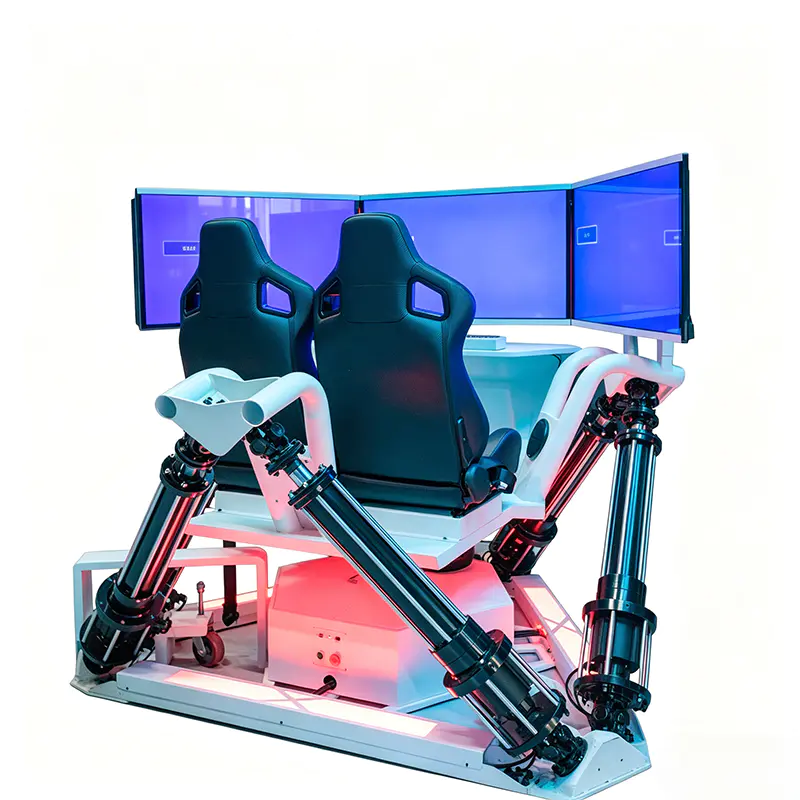
Immersive 6DOF Motion Racing Platform for Commercial Use
The platform uses a high-dynamic parallel structure supported by servo-driven electric cylinders. Parallel mechanisms are well suited to motion simulation because multiple actuators can work together to support the cockpit and generate coordinated movement. This structure helps reduce delayed or disconnected motion and allows the platform to respond rapidly to changing simulation data.
Fast response is important in commercial racing applications. If a visual event occurs before the physical movement begins, the user may notice a lack of synchronization. If the platform continues moving after the virtual event has ended, the experience can feel artificial or uncomfortable. A responsive actuator system and carefully tuned control algorithm help keep the motion output aligned with the software environment.
Many entry-level racing simulators provide vibration, steering feedback, or limited tilting. These features can improve immersion, but they do not reproduce the full spatial behavior of a vehicle. The six-axis platform adds controlled movement in three rotational and three translational directions. This gives venue operators a stronger product offering for customers who expect more than a conventional screen-and-seat setup.
The available movement ranges can be configured according to system design and application requirements. The supplied technical range includes pitch, roll, and yaw options from approximately plus or minus 5 degrees to plus or minus 60 degrees. Lateral and longitudinal displacement can range from approximately plus or minus 10 millimeters to plus or minus 450 millimeters, while vertical lift can range from approximately plus or minus 10 millimeters to plus or minus 800 millimeters. Final values depend on the selected configuration, mechanical design, control profile, and safety requirements.
The platform specification supports angular speeds of up to 50 degrees per second for pitch, roll, and yaw. Linear movement can reach up to approximately 1,000 millimeters per second, with acceleration listed at up to 2.0g for the linear axes. These capabilities allow the platform to reproduce both subtle road feedback and more dramatic racing events.
High speed does not mean that every simulation should operate at maximum performance. Commercial installations require carefully managed motion profiles that balance excitement, comfort, safety, and repeatability. The control system can be tuned to match different audiences, including casual visitors, experienced racing enthusiasts, students, and professional users. A softer profile may be suitable for family entertainment, while a more dynamic setting may be selected for performance demonstrations or competitive racing events.
Positioning accuracy is important for a motion platform because small errors can accumulate during repeated operation. The listed angular positioning accuracy and repeat positioning accuracy are approximately 0.03 degrees. For the translational axes, the listed positioning accuracy is approximately 0.03 millimeters, with repeat positioning accuracy of approximately 0.01 millimeters.
These figures support consistent motion output across repeated demonstrations. In a commercial venue, the platform may perform many operating cycles each day. Consistent positioning helps ensure that the experience remains similar for each customer and reduces the need for frequent manual correction. Precision also supports more reliable software calibration and better synchronization between virtual events and mechanical motion.
The technical information identifies a system response frequency of 0 to 20 hertz. This response range supports the processing of motion cues associated with road texture, vehicle vibration, steering changes, braking, and other rapid simulation events. The practical result is a platform that can produce both broad movement and more refined dynamic feedback.
A high-frequency response must be supported by the entire system, including the mechanical structure, actuator, servo drive, control algorithm, software interface, and cockpit assembly. High-performance hardware alone cannot provide a convincing result if the software commands are delayed or the mechanical system introduces excessive vibration. The platform therefore benefits from integrated design across motion hardware and control technology.
| Parameter | Available or Listed Specification | Application Significance |
|---|---|---|
| Degrees of freedom | 6 | Pitch, roll, yaw, lateral, longitudinal, and vertical movement |
| Pitch range | Approximately ±5° to ±60° | Acceleration, braking, climbing, descending, and body movement |
| Roll range | Approximately ±5° to ±60° | Cornering, banking, lateral body movement, and uneven terrain |
| Yaw range | Approximately ±5° to ±60° | Turning, directional change, and drift effects |
| Lateral displacement | Approximately ±10 mm to ±450 mm | Side movement and lateral vehicle dynamics |
| Longitudinal displacement | Approximately ±10 mm to ±450 mm | Forward and backward movement |
| Vertical lift | Approximately ±10 mm to ±800 mm | Elevation changes, bumps, jumps, and terrain simulation |
| Angular speed | Up to approximately 50°/s | Rapid rotational response |
| Linear speed | Up to approximately 1,000 mm/s | Fast translational response |
| Linear acceleration | Up to approximately 2.0g | Dynamic racing and terrain effects |
| Angular accuracy | Approximately 0.03° | Repeatable rotational positioning |
| Linear positioning accuracy | Approximately 0.03 mm | Precise actuator movement |
| Linear repeat positioning accuracy | Approximately 0.01 mm | Consistent repeated operation |
| System response frequency | 0–20 Hz | Fast response to dynamic simulation commands |
| Noise | Less than approximately 65 dB | Improved suitability for indoor venues |
| Average trouble-free working time | More than approximately 6,000 hours | Support for continuous commercial operation |
| Motor power range | Approximately 400 W to 22 kW | Configuration flexibility for different platform sizes |
| Effective load range | Approximately 2,000 kg to 15,000 kg in the broader platform range | Adaptation to different mechanical designs |
| Supply voltage | Single-phase or three-phase | Compatibility with different installation environments |
The technical specifications represent a configurable product family rather than a single fixed configuration for every customer. A commercial racing platform will normally be selected according to cockpit weight, user weight, available floor area, desired motion envelope, operating frequency, software requirements, and local electrical conditions. A detailed engineering review should be completed before production to confirm the final actuator size, motor power, safety limits, and control profile.
Virtual reality centers need attractions that can encourage visitors to stay longer and return regularly. A motion racing platform can increase the value of a VR experience by adding physical movement to visual immersion. Customers are not merely watching a racing scene; they are sitting inside a moving cockpit and responding to a changing virtual environment.
The single-seat format provides an individual experience that is easy to explain and operate. Staff members can guide one customer at a time, select a scenario, start the program, and supervise the session. The focused design also helps venues organize queues, manage session duration, and calculate capacity more easily.
At technology exhibitions, physical demonstrations often attract more attention than static displays. The platform’s visible motion and interactive racing format can help draw visitors to an exhibition area. It can demonstrate servo technology, motion control, software integration, and human-machine interaction in a way that is understandable even to people without an engineering background.
For manufacturers, universities, and technology organizations, the platform can also serve as a demonstration of advanced automation. The motion system shows how electric cylinders, servo motors, EtherCAT communication, mechanical design, and real-time control algorithms work together in a complete application.
The platform can support educational programs that explain vehicle dynamics and driving safety. Instructors may use controlled scenarios to demonstrate the effects of braking, cornering, acceleration, road slope, or loss of traction. Because the environment is virtual and the motion limits are configurable, students can observe vehicle behavior without the risks associated with real-world driving experiments.
Educational content can be adapted to different age groups and knowledge levels. Basic programs may introduce steering and braking principles, while advanced programs may focus on vehicle stability, suspension response, tire grip, or control systems. The platform therefore has value beyond entertainment and can become an interactive teaching tool.
Racing venues can use the platform for timed competitions, promotional activities, customer challenges, and tournament events. A consistent motion profile gives each participant a comparable experience. When combined with a suitable racing software package, the platform can support scoreboards, lap times, multiplayer event formats, and repeatable courses.
Operators should establish clear procedures for participant screening, session control, emergency stopping, cleaning, inspection, and routine maintenance. These procedures help protect users and preserve the equipment during intensive operation.
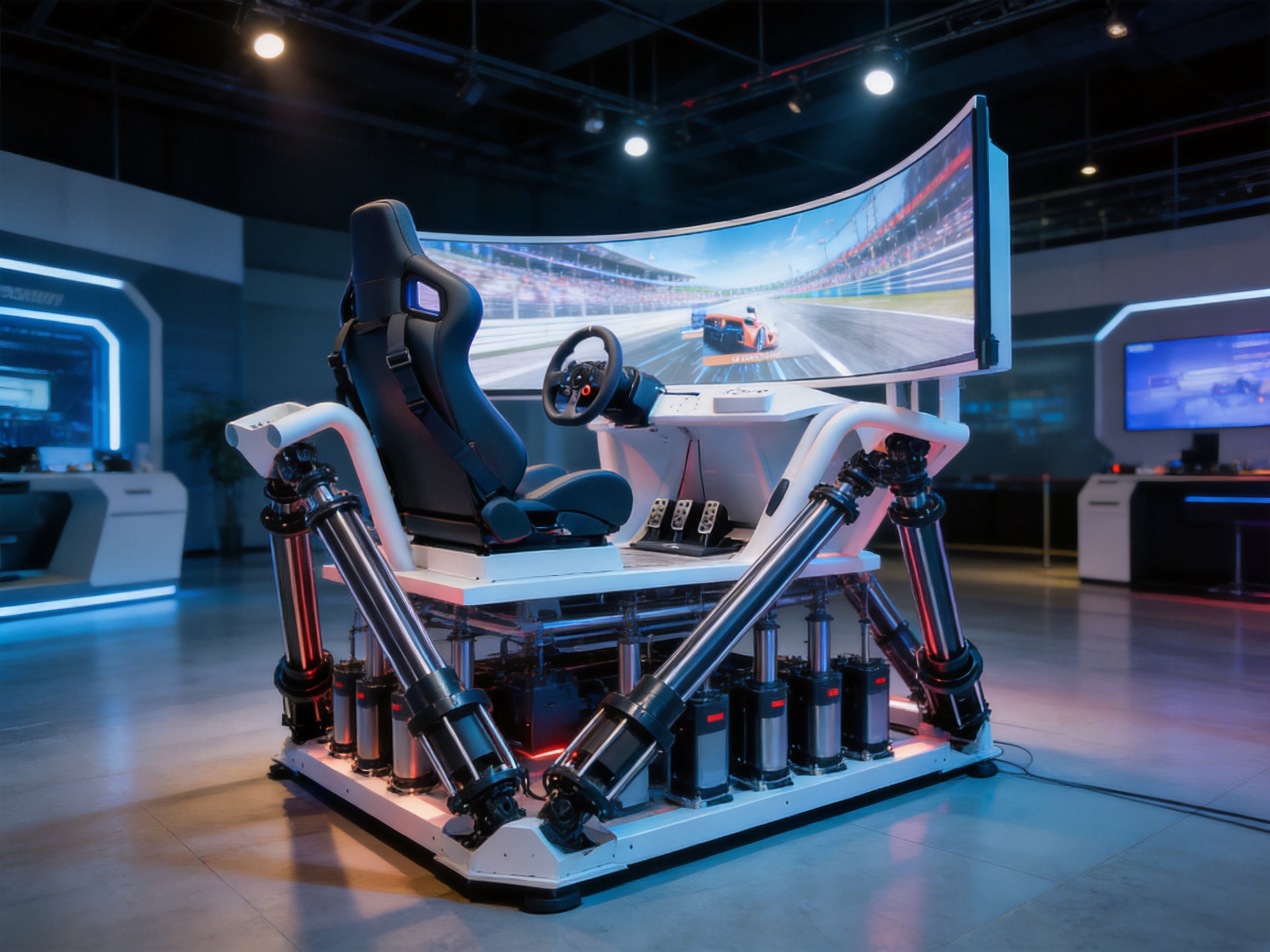
The control system is based on an EtherCAT bus architecture. EtherCAT is commonly used in high-performance automation because it supports synchronized communication between a controller, servo drives, sensors, and other devices. In a multi-axis motion platform, synchronized communication is essential because the actuators must move according to a coordinated trajectory.
The platform integrates bus-type servo motors, motion control software, actuator hardware, and a self-developed control architecture. The control software is designed to process target movement commands and convert them into coordinated actuator positions. It can manage the relationship between virtual vehicle behavior and physical platform movement, helping produce a more natural motion response.
The supplied information indicates that the control software can operate without a conventional manual calibration process in certain configurations. This feature may simplify commissioning and reduce setup time. The actual calibration method will depend on the final platform configuration, sensor arrangement, software version, and customer requirements. Even when automatic or non-calibrated operation is available, professional installation and verification remain important.
A motion simulator does not simply reproduce every movement at its full physical scale. Instead, the control system interprets simulation data and selects motion cues that can be perceived by the user within the platform’s available range. For example, a long virtual acceleration event may be represented by a controlled tilt and repositioning sequence rather than a continuous full-distance movement.
The company’s control solution can include optional matching algorithms and special-effects modules. These options may be used to adjust the motion response for different software platforms, vehicle types, or customer preferences. A racing game designed for rally driving may require a different response from a program designed for formula racing, off-road driving, or educational demonstrations.
Software docking is another important commercial advantage. Venues often want to change content over time, add new scenes, or connect the platform to a preferred simulation environment. A system that supports software integration gives operators greater freedom than equipment locked to one proprietary scenario. Compatibility should be confirmed in advance, including communication protocols, data formats, motion cue requirements, screen or headset hardware, and licensing conditions.
Commercial operators may need several motion profiles. A beginner profile can use slower acceleration, smaller angles, and smoother transitions. An advanced racing profile can provide stronger cornering and braking cues. A demonstration profile may emphasize visible movement for audiences standing outside the platform, while a training profile may prioritize accurate reproduction and low distraction.
Adjustable profiles also help operators serve users with different levels of motion tolerance. Some users prefer a powerful and aggressive experience, whereas others may be sensitive to rapid movement. Configurable software gives venue staff more control over customer comfort and helps reduce the risk of an unsuitable experience.
The electric cylinder is a central component of the motion platform. It converts the rotary output of a servo motor into controlled linear movement through a precision screw mechanism. Compared with traditional hydraulic systems, an electric cylinder can offer advantages in cleanliness, controllability, installation flexibility, and energy management for many indoor applications.
Because the platform is intended for indoor commercial environments, the use of electrically driven actuators can simplify facility requirements. There is no hydraulic oil reservoir, hydraulic piping network, or routine fluid management system of the type required by many hydraulic installations. Electric actuation can also make it easier to monitor position and command precise movement through the servo drive and control bus.
The broader technical range includes motor powers from approximately 400 watts to 22 kilowatts, screw diameters from approximately 12 to 80 millimeters, lead screw values from approximately 5 to 32 millimeters, rated output from approximately 1 to 150 kilonewtons, and stroke or range values from approximately 70 to 800 millimeters. These values indicate that the manufacturer can select different actuator configurations for different load and travel requirements.
For a racing platform, actuator selection must account for the complete moving mass, including the cockpit, seat, screen or visual equipment, safety structure, user, and any accessories. It must also account for dynamic loads, center of gravity, acceleration, duty cycle, installation orientation, and emergency stopping requirements. The correct actuator is therefore selected through engineering calculation rather than by choosing the largest available model.
The platform integrates a high-dynamic ball screw concept into its mechanical design. Ball screw systems are widely used in precision automation because they can provide efficient transmission, repeatable positioning, and controlled linear movement. Proper selection of screw diameter, lead, preload, lubrication, bearing support, and motor matching is important for achieving stable performance.
A well-designed actuator must also manage heat, vibration, bearing loads, and mechanical alignment. The screw assembly, motor, housing, coupling, and mounting points must operate as a coordinated unit. Manufacturing accuracy is especially important because misalignment can increase noise, reduce service life, and affect motion precision.
Suzhou Tongyousheng Electronic Technology Co., Ltd. is presented as a high-tech enterprise integrating research and development, production, and sales. Its product scope includes electric cylinders, linear motion modules, linear motor modules, servo presses, robotic seventh axes, and multi-degree-of-freedom platforms. This broad portfolio is relevant to the racing platform because it indicates experience with both individual motion components and complete motion systems.
The company has an experienced research and development team, advanced design software, high-precision CNC machining centers, and a portfolio of core patents. These capabilities support a product development process that can begin with mechanical and control concepts and continue through engineering validation, component production, assembly, and system integration.
Design software is used to develop the actuator, parallel mechanism, cockpit structure, mounting interfaces, and protective elements. Three-dimensional mechanical modeling helps engineers evaluate interference, actuator travel, load distribution, assembly access, and the movement envelope before production. Simulation and design review can also help identify potential issues with center of gravity, structural stiffness, and cable routing.
For a six-axis system, mechanical design must consider the interaction of every actuator. The attachment points, universal joints, hinges, flanges, or trunnions influence the available motion range and the forces applied to the structure. The supplied technical information lists front and rear fork hinges, flange connections, and trunnion installations among the available installation forms. This range of mounting options can help engineers adapt the actuator to different platform structures.
High-precision CNC machining centers support the manufacture of actuator housings, mounting brackets, connection components, bearing seats, structural plates, and other precision parts. CNC processing can improve dimensional consistency and make it easier to maintain repeatability across production batches. Accurate machined interfaces are important for maintaining alignment between the screw assembly, motor, bearings, and external mounting points.
Machining quality also affects installation and maintenance. Components with properly controlled dimensions can be assembled more consistently, inspected more easily, and replaced with less adjustment. For commercial equipment, this contributes to reduced downtime and more predictable service work.
Manufacturing a complete motion platform involves more than producing individual parts. The supplier must assemble the mechanical system, install servo motors and drives, connect the EtherCAT network, configure the control software, verify movement limits, and test the platform under representative loads.
Functional testing should include low-speed movement, full-range movement where appropriate, coordinated multi-axis motion, emergency stopping, limit protection, repeated operation, communication stability, and software response. Testing may also evaluate noise, vibration, temperature, cable movement, and actuator synchronization. These procedures are particularly important for equipment used by members of the public.
The listed average trouble-free working time of more than approximately 6,000 hours provides a reference for expected reliability under defined operating conditions. Actual service life depends on duty cycle, load, operating speed, maintenance, environment, installation quality, and software settings. A suitable preventive maintenance plan should accompany the equipment.
The company collaborates with state-owned enterprises, defense technology institutions, and leading universities to promote industry, academia, and research integration. Such cooperation can expose the organization to demanding requirements related to motion accuracy, control reliability, system integration, and specialized applications.
Experience across industrial automation and motion simulation can be valuable when developing a commercial racing platform. Industrial customers often require reliability, repeatability, and long service life, while entertainment customers require visual appeal, responsiveness, ease of use, and customer comfort. A supplier familiar with both areas can balance performance and practical operation more effectively.
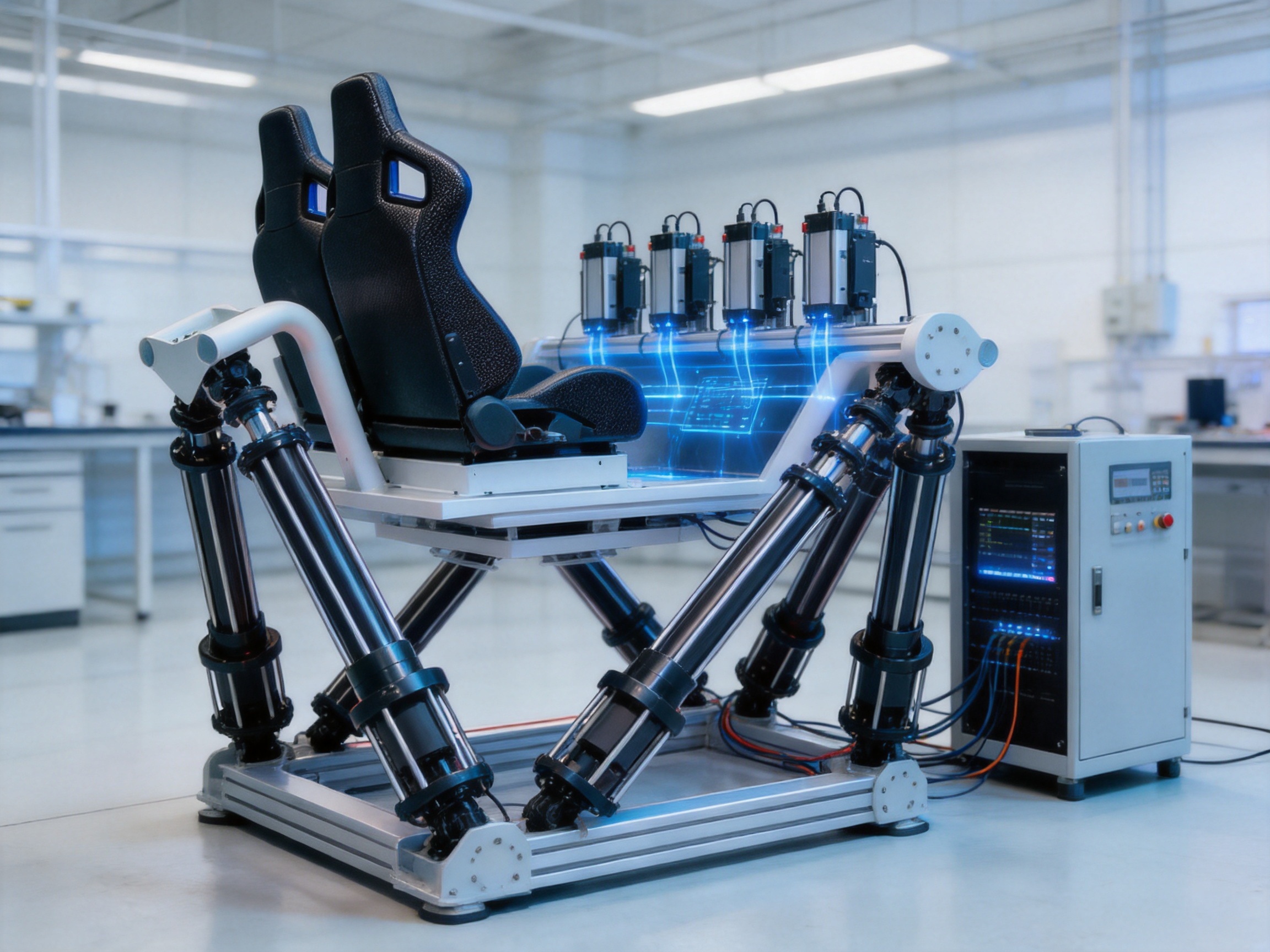
Compared with static racing cockpits, the six-axis platform provides a substantially broader motion envelope. A static cockpit may deliver steering force and visual immersion, but it cannot physically tilt, translate, or lift the user. The six-axis design creates more physical cues and can make a wider range of driving events perceptible.
Compared with two-axis or three-axis motion systems, the six-axis design can combine rotational and translational movement. This is useful when an application requires more than basic pitch and roll. For example, lateral translation can complement roll during cornering, while vertical movement can represent jumps or irregular terrain. Yaw and longitudinal translation can add further directional and acceleration cues.
Some competing platforms are built around a fixed application, fixed software package, or fixed physical layout. The product described here is based on configurable actuator and control technology. Its broader product family includes different motor powers, loads, stroke lengths, screw dimensions, and installation forms. This makes it possible to engineer a solution for different venues rather than forcing every customer into the same specification.
The platform can also be adapted to different visual systems. Depending on the project, a customer may use a large display, multi-screen arrangement, projection system, or virtual reality headset. The motion system can be integrated with the selected visual solution as long as communication, weight, safety, and control requirements are properly evaluated.
Electric servo actuation can be a practical alternative to hydraulic motion systems in indoor commercial locations. It avoids hydraulic fluid management and may reduce the infrastructure required for installation. Electric control also supports accurate position feedback and direct integration with digital control networks.
This does not mean that electric systems are suitable for every application. Large industrial simulators with extreme loads may require other technologies. However, for an indoor commercial racing attraction, electric cylinders can offer a useful combination of cleanliness, controllability, compactness, and maintenance convenience.
The single-seat layout is an important design advantage for commercial venues. A large multi-seat simulator may offer shared experiences, but it also requires more floor area, higher investment, and more complex scheduling. A single-seat system allows operators to install multiple units if required, create individual racing stations, or use the platform as a premium attraction within a smaller area.
The listed broader technical range includes footprint options from approximately 0.5 to 8 square meters, depending on the selected system. The final platform dimensions will be determined by the cockpit, display equipment, safety enclosure, access requirements, and motion envelope. Compact design helps the equipment fit into shopping centers, exhibition halls, education rooms, entertainment venues, and technology showrooms.
Safety is a primary requirement when equipment moves a person through multiple axes. The final installation should include physical travel limits, software travel limits, emergency stop controls, appropriate guarding, seat restraints, structural inspection, and a clear operating procedure. Operators should be trained to stop the system immediately if unusual noise, vibration, communication failure, or unexpected movement occurs.
The cockpit should be designed for secure seating and easy access. Seat belts or other restraints may be required according to the motion intensity and local regulations. Entry and exit should be convenient, especially in venues where many users will participate throughout the day. The system should also provide sufficient clearance around moving components to prevent contact with personnel or nearby objects.
Motion intensity must be matched to the user. A commercial system should not be operated at an aggressive profile without considering user height, weight, health declarations, age limitations, and motion sensitivity. Venue policies should identify situations in which a person should not participate, such as certain medical conditions or sensitivity to motion effects. Operators should communicate the experience clearly before each session.
Safety testing should cover power loss, communication interruption, sensor faults, actuator faults, emergency stop activation, and unexpected software commands. The platform should move to a safe state when a critical fault is detected. Specific safety functions must be defined during engineering and verified during commissioning.
Regular maintenance is important for commercial motion equipment. Operators should inspect actuator mounting points, hinges, flanges, trunnions, cable chains, electrical connectors, protective covers, seat restraints, and structural fasteners. The maintenance schedule should follow the supplier’s recommendations and the actual duty cycle of the venue.
Electric cylinders require attention to screw lubrication, bearing condition, alignment, abnormal noise, temperature, and backlash. Servo motors and drives should be checked for error codes, overheating, communication status, and stable operation. EtherCAT connections should be protected from accidental damage and reviewed during scheduled inspections.
Software maintenance may include controller backups, parameter records, motion profile management, firmware updates, and event log review. Keeping a record of operating hours and fault conditions can help identify patterns before they become major failures. Replacement components should be selected according to the original design specifications to preserve performance and safety.
The supplier’s experience with electric cylinders, linear motion modules, servo presses, and multi-degree-of-freedom platforms can support an integrated service approach. Customers can discuss actuator selection, spare parts, software adjustment, motion profile optimization, and system upgrades with a supplier familiar with the complete motion chain rather than only one isolated component.
Before installation, the customer should confirm the available floor area, floor loading, ceiling height, access route, electrical supply, ventilation, ambient temperature, noise requirements, and network environment. The platform may require single-phase or three-phase power depending on the selected motor and control configuration. Local electrical standards and venue regulations must be considered.
The installation area should provide sufficient clearance for the full movement envelope, not merely the static footprint. The visual system, seat access, protective structure, operator position, and emergency exit path should be included in the layout. A compact platform can still require additional space for safe movement and customer access.
Software integration should be planned at an early stage. The customer should identify the desired racing software, virtual reality equipment, display system, game engine, motion data interface, and content licensing requirements. The supplier can then determine whether a standard interface is suitable or whether a customized matching algorithm is required.
Commissioning typically includes mechanical inspection, electrical connection, controller configuration, actuator initialization, movement verification, visual-system alignment, software testing, and operator training. The initial motion profile should begin conservatively. After confirming correct operation, the venue can gradually adjust movement intensity to match the target audience and application.
A commercial motion platform should be evaluated not only by its technical specifications but also by its ability to support business objectives. The product can become a premium attraction that justifies higher session pricing than a static simulator. Its physical motion is visible to spectators, which may help attract additional visitors and create interest in the venue.
Repeatability is another source of commercial value. If the platform can reproduce a consistent experience, operators can organize competitions, timed challenges, promotional campaigns, and educational demonstrations. The ability to change software scenes can help prevent the attraction from becoming repetitive and may support seasonal or event-based content.
Maintenance and energy requirements also affect total operating cost. The final cost depends on motor power, session duration, duty cycle, local electricity rates, service requirements, and the number of operating hours. Electric actuation may offer practical benefits in facilities where hydraulic infrastructure would be difficult or expensive to install.
Customer retention depends on more than motion intensity. A successful attraction should combine comfortable seating, clear instructions, attractive visuals, reliable operation, short reset times, and content that users want to experience again. The platform’s compact single-seat design and configurable software can help operators create a controlled and repeatable customer journey.
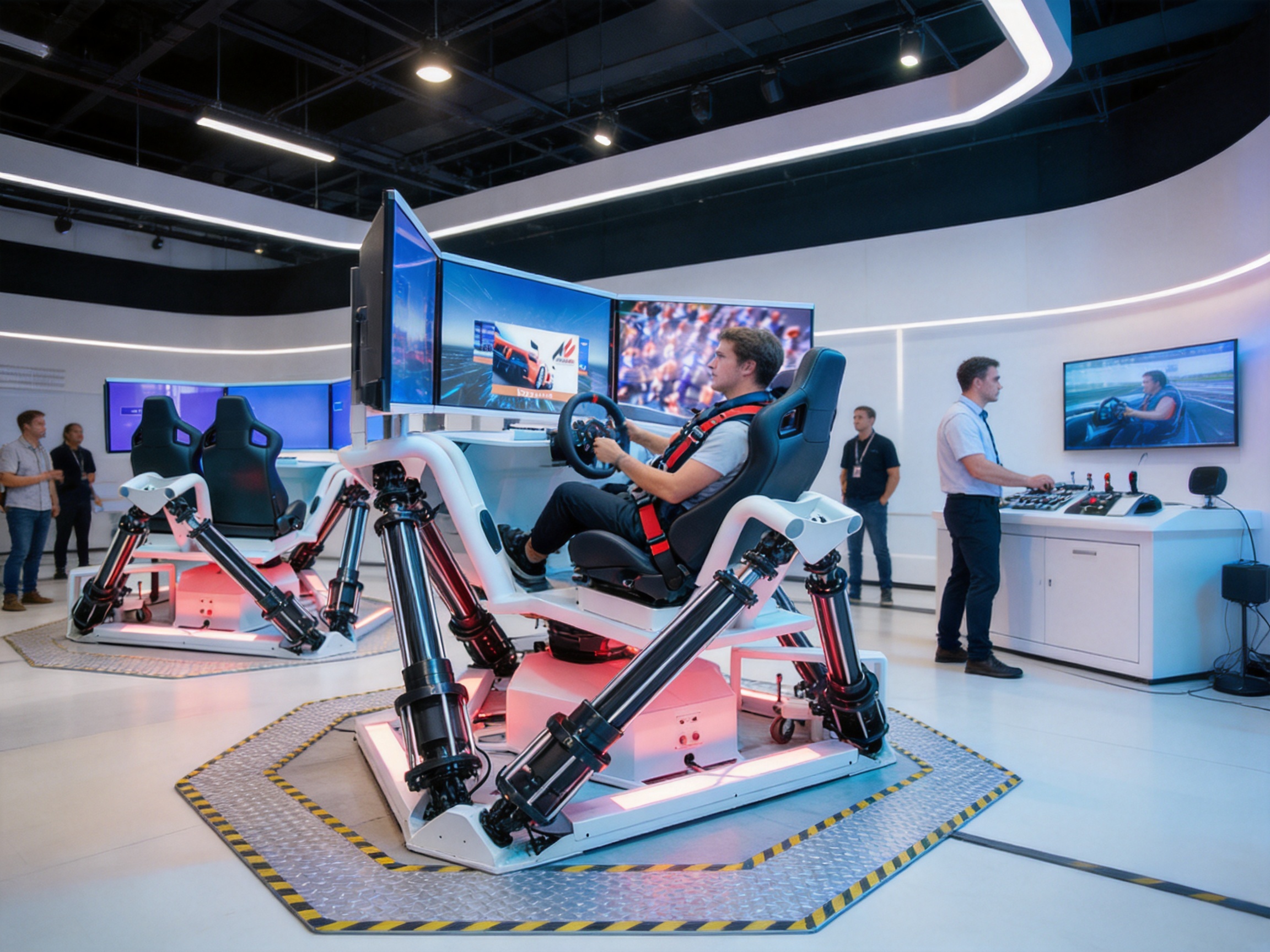
An entry-level commercial configuration may use moderate motion ranges, a compact visual system, a simplified cockpit, and conservative motion profiles. This format can be suitable for shopping centers, family entertainment areas, and smaller VR venues. The focus is on easy operation, strong visual appeal, and a comfortable experience for a broad audience.
A premium configuration may include a more advanced cockpit, enhanced display or virtual reality equipment, a stronger servo system, larger motion ranges, racing-style controls, and expanded software features. This type of installation is suitable for dedicated racing venues, brand events, technology parks, and competitive entertainment facilities.
An educational configuration may prioritize clear data presentation, adjustable motion intensity, instructor control, and scenario selection. The platform can be used to demonstrate cornering, braking, acceleration, terrain changes, and vehicle stability. It may also be integrated with teaching materials, displays, or instructor monitoring systems.
An exhibition configuration should emphasize quick operation, visible movement, strong external presentation, and reliable short-cycle performance. The platform may be used for demonstrations lasting several minutes, with staff supervision and a simplified interface. Safety guarding and visual access are especially important when many spectators are gathered around the equipment.
Purchasing the actuator, controller, structure, software interface, and cockpit from separate suppliers can create integration challenges. Different vendors may use different communication protocols, mechanical tolerances, software assumptions, and service procedures. An integrated supplier can coordinate these elements from the beginning of the project.
Suzhou Tongyousheng Electronic Technology Co., Ltd. combines motion component manufacturing with system development. Its experience includes electric cylinders, linear modules, servo presses, robotic motion axes, and six-degree-of-freedom platforms. This combination gives customers access to both standardized products and customized engineering solutions.
The company was established in 2013 and has expanded its capabilities through product development and manufacturing. Its milestones include the development of linear modules, electric cylinders, servo presses, six-degree-of-freedom platforms, motion-control algorithms, and multi-degree-of-freedom linkage systems. This development history supports a product philosophy based on continuous technical improvement rather than a single-purpose simulator design.
The company’s stated values include quality, reputation, innovation, and development. Its mission is to advance industrial progress through innovation and craftsmanship while building long-term trust with customers worldwide. For an international commercial equipment project, long-term cooperation can be important because software updates, spare parts, motion adjustments, and technical support may be needed after installation.
6DOF means six degrees of freedom. The platform can perform pitch, roll, yaw, lateral displacement, longitudinal displacement, and vertical lift. These movements are coordinated to reproduce the sensations associated with acceleration, braking, cornering, terrain changes, directional movement, and vehicle body dynamics.
Yes. The single-seat design, compact structure, configurable motion profiles, software docking capability, and simplified operation make it suitable for VR centers, racing venues, technology exhibitions, and automotive education facilities. The final configuration should be selected according to venue size, audience, duty cycle, and local safety requirements.
Yes. Drifting and sudden braking can be represented through coordinated pitch, roll, yaw, lateral, longitudinal, and vertical motion. The exact effect depends on the simulation software, motion-cueing algorithm, selected movement limits, and operator settings.
The platform supports software docking and can be configured with matching algorithms or interface solutions. Compatibility depends on the software’s motion-data output, communication protocol, visual system, and licensing conditions. The software should be reviewed with the supplier before final system selection.
The broader technical information lists possible system footprints from approximately 0.5 to 8 square meters. The actual size depends on the cockpit, visual hardware, safety enclosure, actuator configuration, and motion envelope. Customers should request a final layout drawing for the selected configuration.
The listed ranges include approximately plus or minus 5 to plus or minus 60 degrees for pitch, roll, and yaw; approximately plus or minus 10 to plus or minus 450 millimeters for lateral and longitudinal displacement; and approximately plus or minus 10 to plus or minus 800 millimeters for vertical lift. Final ranges depend on engineering configuration and operating requirements.
The listed technical specification identifies noise below approximately 65 decibels. Actual noise depends on motor power, speed, acceleration, installation, load, floor structure, and maintenance condition. Proper alignment and regular service are important for keeping noise within the expected range.
The control system uses an EtherCAT bus architecture with bus-type servo motors, platform control software, and coordinated motion algorithms. The controller receives movement commands and calculates the required actuator trajectories for the six axes.
The supplied information indicates that the platform control software can support non-calibrated operation in certain configurations. The exact process depends on the final hardware, sensors, and software. Professional commissioning and verification are still recommended to confirm accurate movement and safe limits.
Maintenance normally includes inspection of the screw assemblies, bearings, joints, fasteners, cables, electrical connections, servo drives, safety devices, and structural components. Lubrication, parameter backups, fault-log review, and software maintenance should follow the supplier’s recommendations and the venue’s operating schedule.
Yes. Customization may involve motion range, motor power, effective load, cockpit layout, installation method, visual system, software interface, motion profile, safety enclosure, and special-effects functions. Technical customization should be completed after reviewing the customer’s application and installation conditions.
The customer should provide the intended application, cockpit and user weight, desired motion ranges, daily operating hours, venue dimensions, electrical supply, visual system, preferred software, expected audience, safety requirements, and delivery location. This information allows the supplier to recommend a suitable configuration and prepare accurate technical documentation.
The immersive 6DOF motion racing platform offers a complete solution for organizations seeking a more engaging and physically realistic driving simulator. Its six-axis parallel mechanism, servo-driven electric cylinders, EtherCAT control system, precision motion capability, configurable software, and single-seat commercial design combine to address both performance and operational needs.
Its main advantage over conventional static or limited-axis systems is the ability to coordinate rotational and translational movement. This allows the platform to communicate a broader range of driving events, including drifts, braking, cornering, acceleration, rough terrain, elevation changes, and directional transitions. The result is a stronger connection between virtual content and physical sensation.
The product is also supported by the manufacturing and engineering capabilities of Suzhou Tongyousheng Electronic Technology Co., Ltd. The company’s experience in electric cylinders, linear motion systems, servo presses, robotic axes, motion simulation, CNC machining, software algorithms, and multi-degree-of-freedom platforms provides a foundation for integrated project delivery.
For commercial customers, the platform can serve as a premium entertainment attraction, a technology demonstration system, an automotive education tool, or a competitive racing installation. With appropriate configuration, safety planning, software integration, and preventive maintenance, it can provide reliable operation and an immersive user experience in a wide variety of indoor environments.
1. Product technical information supplied for the immersive six-degree-of-freedom motion racing platform.
2. Product specifications for electric cylinders, servo motors, ball screw mechanisms, and linear motion systems supplied by the manufacturer.
3. General engineering principles for parallel kinematic motion platforms and multi-axis motion control.
4. General application guidance for EtherCAT-based industrial servo communication and synchronized motion systems.
5. General safety and maintenance considerations for electrically actuated motion simulation equipment.
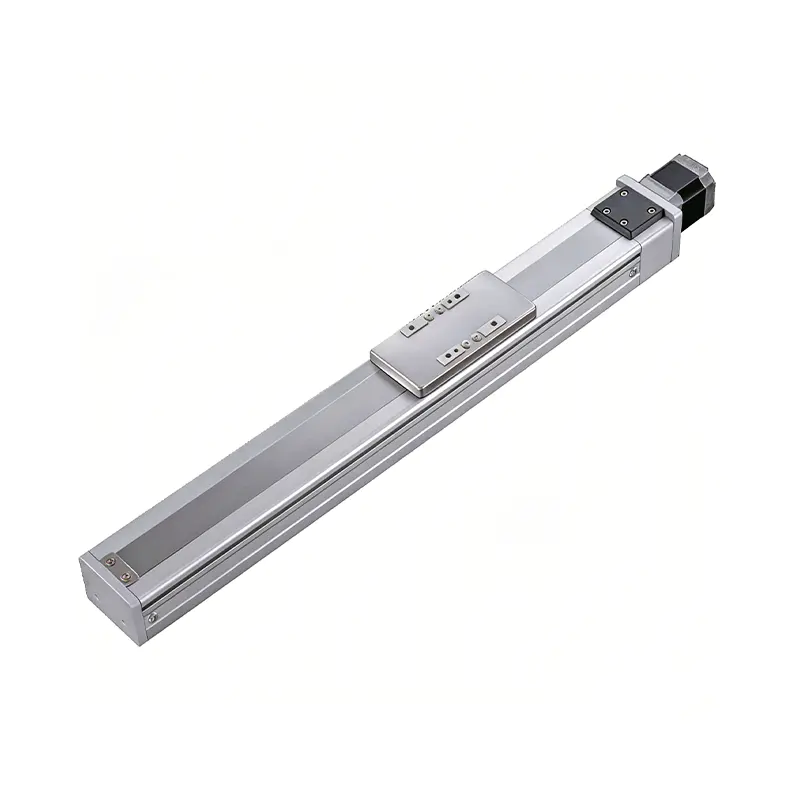 0.01mm High Precision Ball Screw Driven Rail-Embedded Linear Module
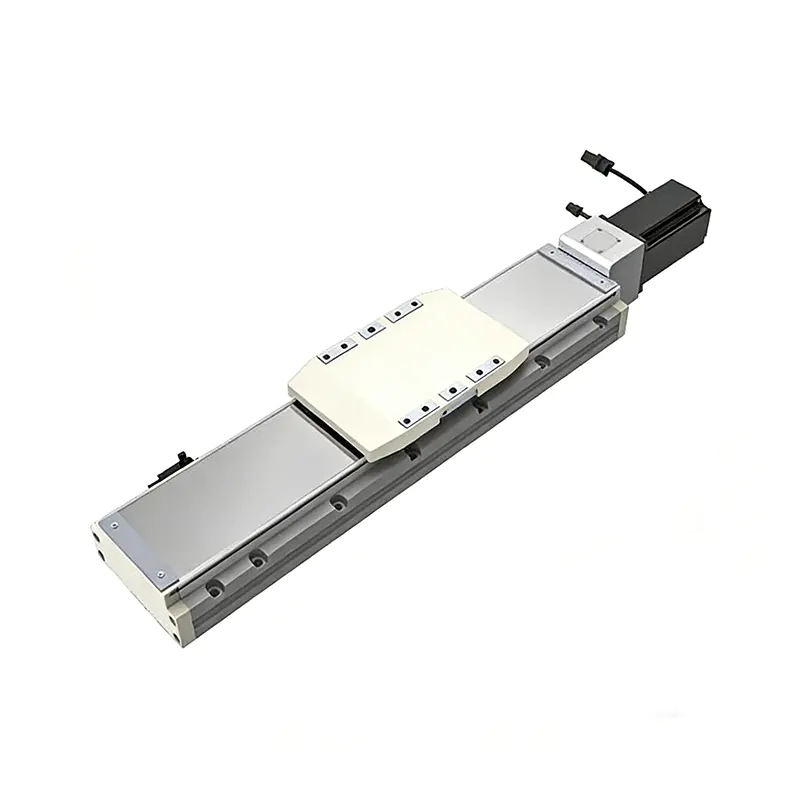 Heavy Load Ball Screw Driven Rail-Embedded Linear Module
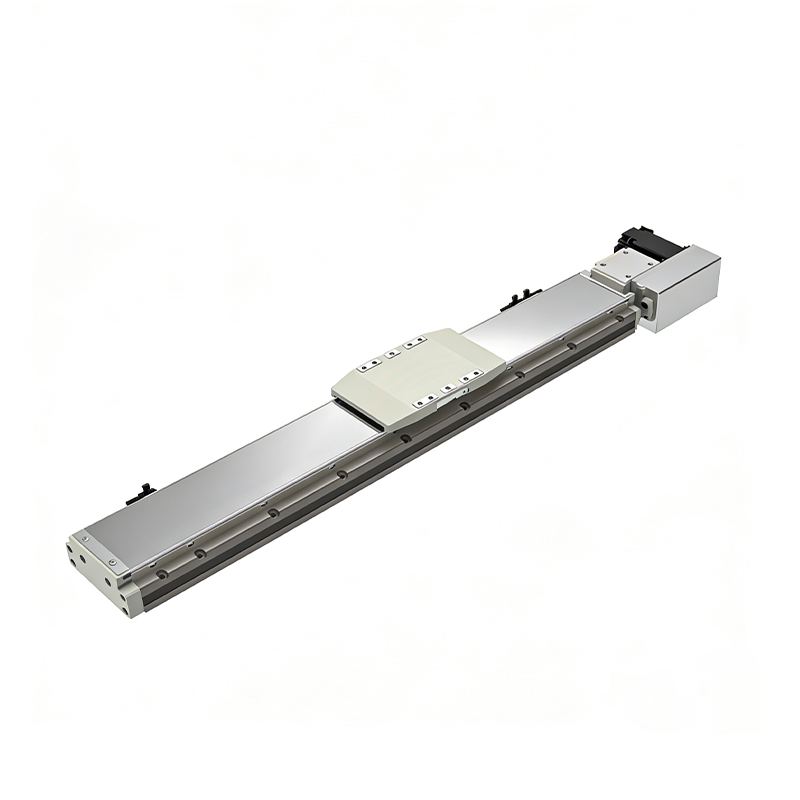 110KG Load Long Stroke Rail-Embedded Linear Module
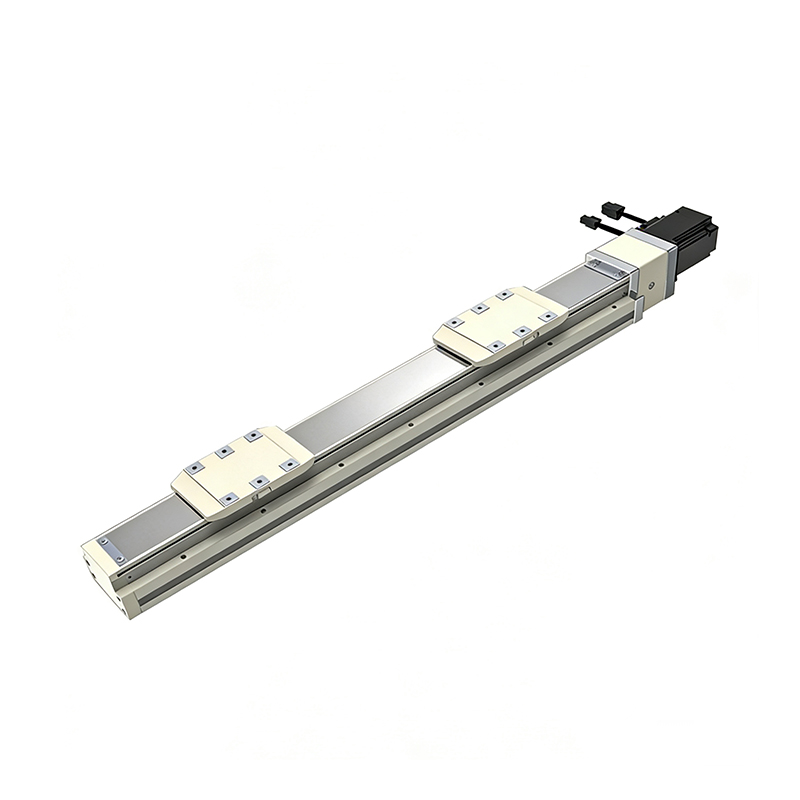 Dual-Slider High Precision Rail-Embedded Linear Module
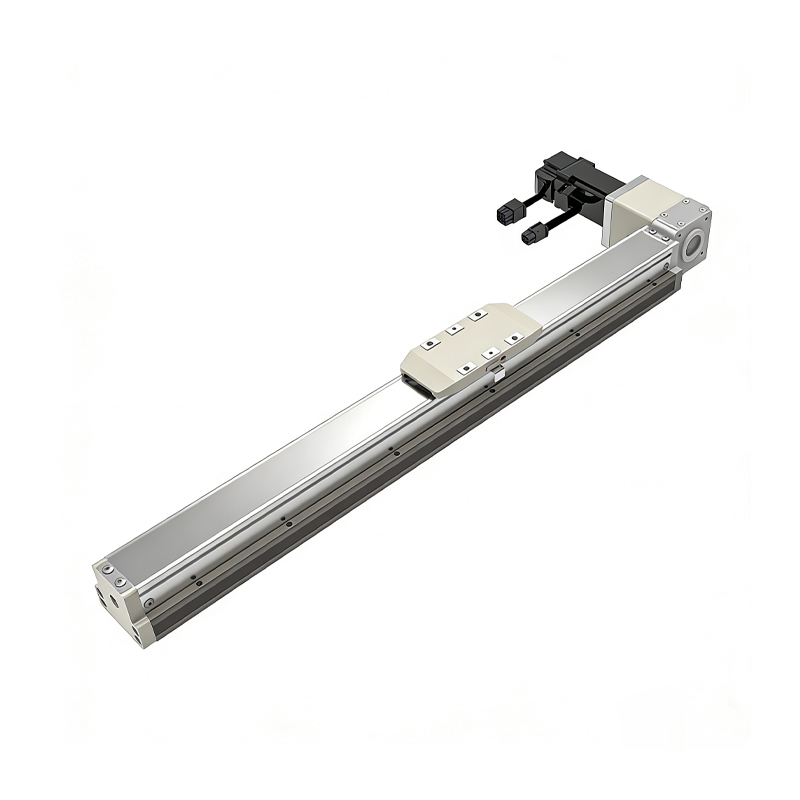 Belt Driven Dust-Proof Rail-Embedded Linear Module
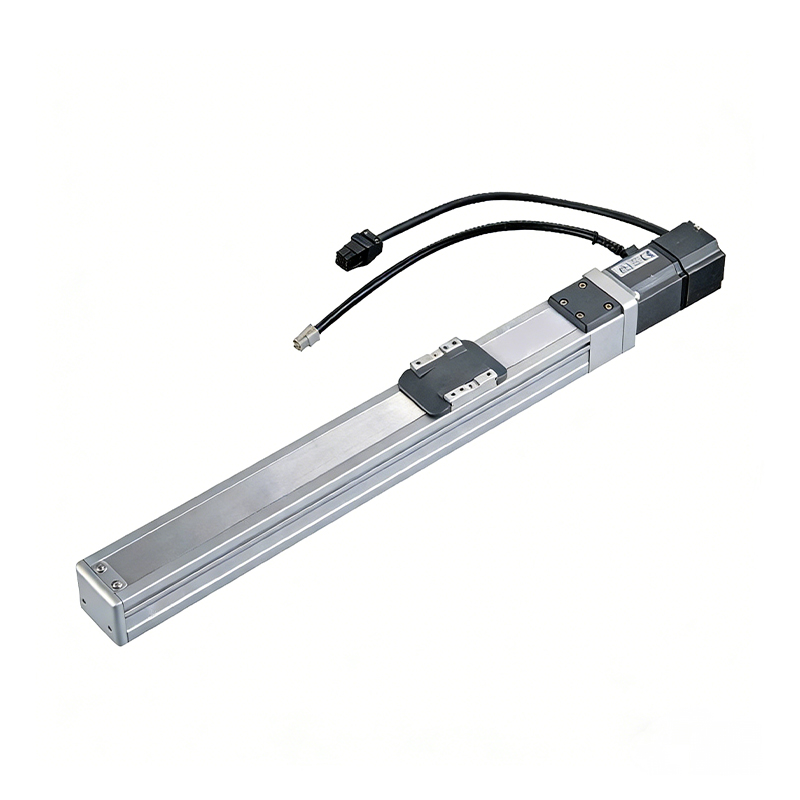 0.01mm High Precision Light Load Ball Screw Linear Module
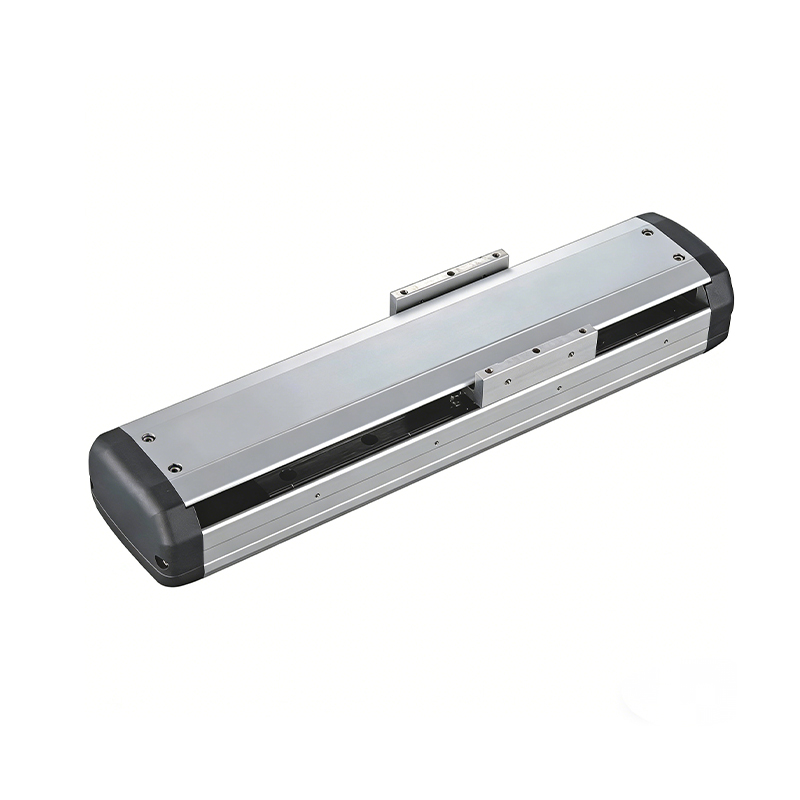 Ball Screw Linear Module with Built-in Sensor
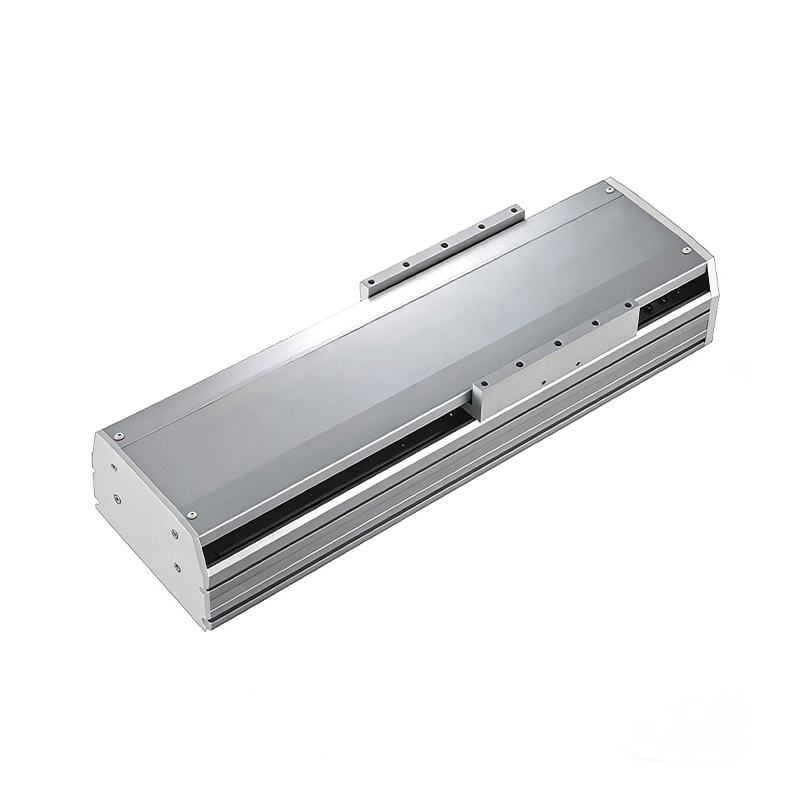 2000mm Long Stroke Ball Screw Linear Module
This 2000mm Long Stroke Ball Screw Linear Module is customized for large-range linear movement automation tasks, support...
READ MOREThis 2000mm Long Stroke Ball Screw Linear Module is customized for large-range linear movement automation tasks, support...
READ MOREThis 2000mm Long Stroke Ball Screw Linear Module is customized for large-range linear movement automation tasks, support...
READ MOREThis 2000mm Long Stroke Ball Screw Linear Module is customized for large-range linear movement automation tasks, support...
READ MORE
If you are interested in our products, please leave us a message. We look forward to providing you with
professional services!
Innovation and transcendence make factory intelligent manufacturing efficient and convenient!
+86 186 2508 0683
19962977901
sales@sz-tys.com
Building 5, Suzhou Mudu International Science and Technology Innovation Park, Jinfeng South Road, Suzhou City, Jiangsu Province, China
